Catching Up at Bracket Brewing
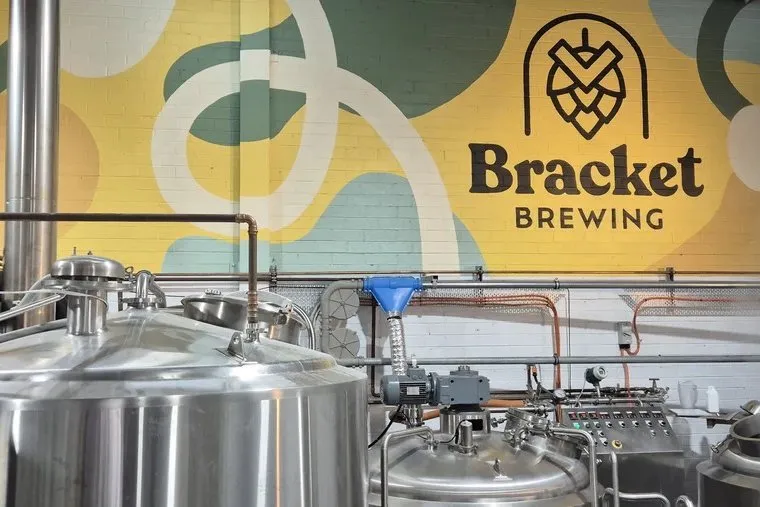
Bracket Brewing has built a serious reputation among Australian craft drinkers. The beers are precise, often bold and rarely repeated. There’s no permanent core range, just a steady rotation of releases driven by curiosity and constant refinement.
We caught up with co-owner and head brewer Mike Meletopoulo during a brew day to talk about where it all started, what keeps him experimenting, and why sometimes the best decision a brewer can make is to dump a batch. We paused a few times while Mike stepped downstairs to help out. Even at one of Australia’s most respected breweries, the work doesn’t stop when the conversation starts.
Mike’s path into brewing started, like many good stories, by accident.
“Personally, since… 2012 or 2013,” he says. “A mate and I were not great uni students. We took a food science subject because we’d heard it was easy.”
The first lecture was on fermentation.
“So we bought a Coopers home brew kit on the way home and it was all downhill from there.”
Homebrewing quickly turned into something more serious. Mike’s first real step into the industry came in the UK, working at Stewart Brewing and then Edinburgh Beer Factory before returning to Australia to work at Batch and Archie Rose.
One interview moment stuck with him.
“They asked what my favourite beer was and I said Augustiner Munich Helles. The owner gave me a weird look.”
It turned out the brewery interviewing him happened to make a Helles inspired by the same beer.
“My mate Dave got grilled afterwards because they thought he’d prepped me. But he didn’t.”
It’s still one of Mike’s favourite beers today.
The beer that never makes it
One of the less obvious realities of brewing is how much beer never makes it into a can or keg. Bracket produces around 75,000 litres a year, but only about 55,000 litres ends up packaged.
“The rest is loss,” Mike says. “When you look at it as about 20,000 litres a year that doesn’t make it into pack, that’s a huge amount of beer.”
Some of that is normal process loss. Some comes from harder decisions. Three batches were dumped last year alone.
For a smaller brewery, Mike says that can sometimes be the right call.
“I think there’s less risk for us to dump a whole beer because we’re small and we can pivot quickly.”
Larger craft breweries can face different pressures, especially when contracts or distribution commitments are involved. He points to Garage Project recently sharing that they dumped a batch they weren’t happy with.
“I thought that was impressive. Just saying ‘we weren’t happy with it, so it’s gone’.”
Two breweries that shaped the thinking
The first was Garage Project in New Zealand.
“In the early 2010s they were doing so much crazy stuff. So many amazing beers. It was always exciting.”
The second was Cellarmaker in San Francisco.
“They had constantly rotating taps. A few seasonal beers but everything else kept changing. Tiny taproom, heaps of variety.”
That visit stuck with him.
“I walked in and thought ‘holy fuck, this is amazing!’.”
Bracket adopted a similar mindset. No permanent core beers, just constant movement.
Small changes, big shifts
Brewing improvements often come from unexpected places.
“I’m going to make myself sound stupid,” Mike says, laughing. “But we didn’t use a pH probe for a very long time.”
When the team eventually revisited pH control, they discovered it had a big impact on haze stability in their hazy beers. Some batches looked beautifully turbid while others tasted great but appeared less vibrant.
What followed was months of small adjustments.
“You change one thing and something else shifts,” Mike says.
Eventually the team arrived at a process that worked. Not through a single breakthrough, but through steady trial and error.
“When you finally land somewhere that works, it’s pretty satisfying.”
Ingredient quality remains a constant focus at Bracket.
“For us there’s always going to be a constant search for the best hops we can get our hands on.”
Better access to American hop lots has helped recently. Mike says it’s fascinating how much variation you can see within a single hop variety depending on when it’s harvested.
“You can see four lots of the same hop and they’re completely different.”
Outside the brewery, Mike’s curiosity about fermentation keeps expanding. At home he experiments with lacto-fermented vegetables and other projects. Recently he’s been diving into sake, which uses a multi-parallel fermentation where mould converts starch into sugar while yeast ferments it at the same time.
“It’s a really cool process,” he says. “When I say when I get time… I’ve already bought most of the gear.”
The most underrated style in Australia
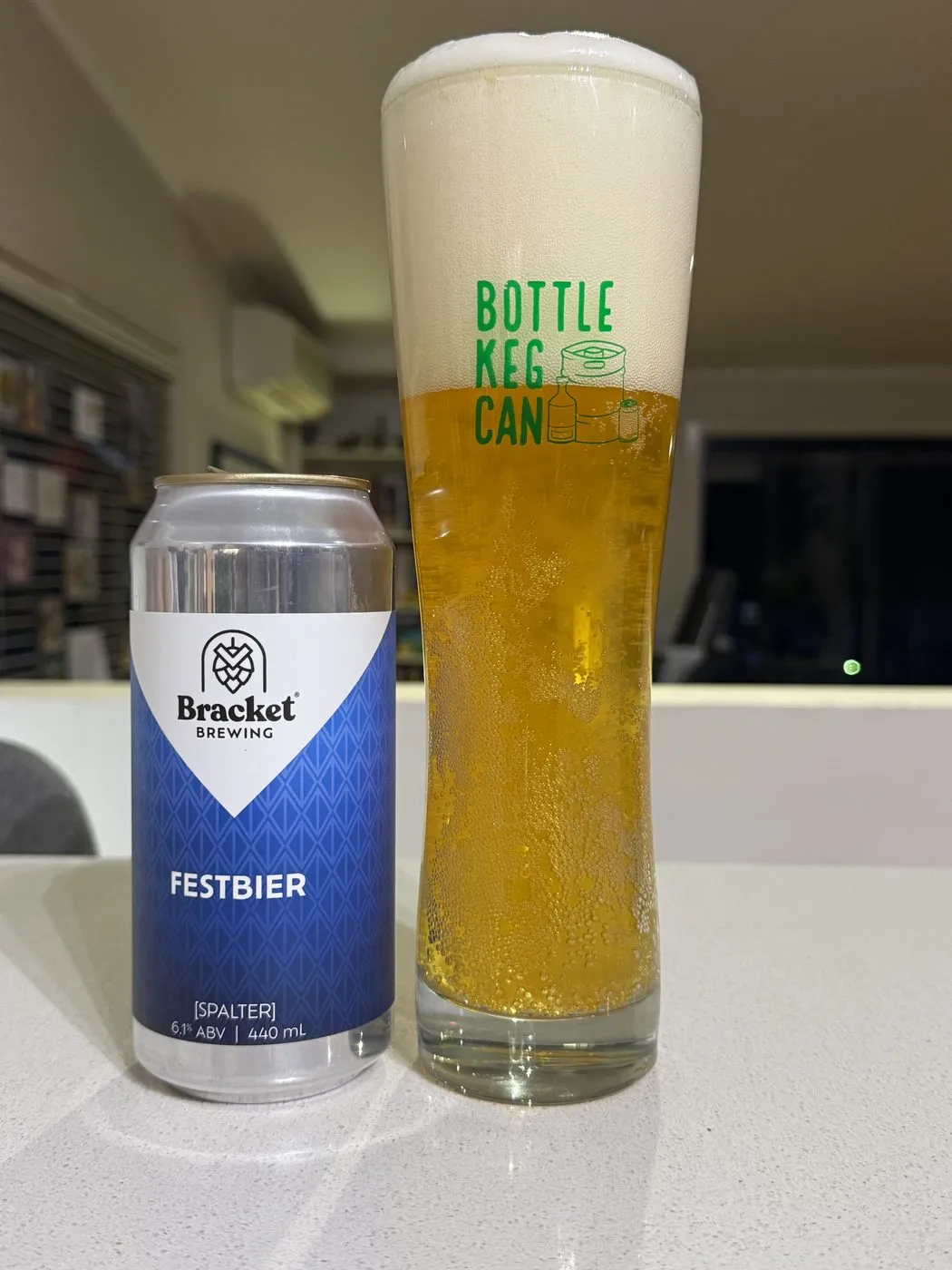
Ask Mike which style deserves more attention in Australia and the answer is immediate.
“Lagers.”
Many drinkers move away from lager when they first discover craft beer, associating the style with macro breweries. But for brewers, lager can be the ultimate test.
“It’s the best way to judge a brewery,” Mike says. “If their plain lager is bad, I probably wouldn’t spend more money there.”
There’s nowhere to hide.
“As Nick from One Drop says, it’s like standing in front of a crowd with your pants down.”
Another style Mike thinks deserves more attention locally is Belgian beer. Some Australian breweries are producing excellent examples, but they often fly under the radar.
Taste is personal
Something else that has surprised him over the years is how much perception can shift. Leading up to a release he might taste the same beer every day for weeks.
“Some days I’ll hate it and have no idea why,” he says.
A week later the same beer might taste fantastic.
“It’s very personal.”
That variability is part of the reason Bracket keeps experimenting rather than settling into a fixed lineup. One release might lean toward modern Cali IPA, while the next might push back toward a more classic West Coast style.
Another misconception Mike often hears relates to hazy beer. Many drinkers assume the haze is yeast.
“It’s not. Or at least it shouldn’t be.”
In most cases haze comes from proteins in the malt interacting with polyphenols from the hops. Even when sediment forms in the can, it’s often protein rather than yeast.
“It’s one of those brewing myths that’s stuck around.”
For Mike, brewing’s biggest appeal is the feedback loop.
“With beer you can see the result of a change in a couple of weeks.”
But another part of the job matters just as much.
“I like talking with our regulars,” he says. “I like hearing when they like the beers, and when they don’t.”
Sometimes the criticism stings.
“But if someone’s comfortable telling you that to your face, that’s a good thing.”
It means they care.
Thanks again to Mike for taking the time to chat with us in the middle of a brew day. If you’re keen to try some of the beers we talked about, the latest releases from Bracket have just landed and are sitting cold in the fridges at the shop now.